Samsung 34' Odyssey G5 Ultra-Wide Gaming Monitor with 1000R Curved Screen | 165Hz, 1ms, FreeSync Premium, Large Display, Eye Comfort, Multiple Ports, WQHD (LC34G55TWWNXZA): Is It Worth Buying?
Rating shown is the Amazon customer average, not our own score.

A 34-inch ultra-wide curved monitor built for gaming, with a 165Hz refresh rate and 1000R curve. It suits gamers who want an immersive, high-refresh screen without moving to a full multi-monitor setup.
Check the live price on Amazon
We may earn a commission at no extra cost to you.
What stands out
- 165Hz refresh rate suits fast-paced gaming
- 1ms MPRT response time reduces motion blur
- FreeSync Premium cuts tearing and stutter
- 1000R curve adds strong immersion
- 21:9 WQHD gives dual-monitor-like screen space
- 4.3/5 average across over 2,600 ratings
Trade-offs to know
- VA panel means narrower viewing angles than IPS
- HDR10 without stated local dimming limits HDR depth
- Curved ultra-wide format not ideal for color-critical work
Key Specifications
| Brand | Samsung |
|---|---|
| Screen Size | 34 inches |
| Resolution | WQHD 1440p |
| Aspect Ratio | 21:9 |
| Screen Surface Description | Curved |
| Curvature | 1000R |
| Refresh Rate | 165Hz |
| Response Time | 1ms (MPRT) |
| Adaptive Sync | AMD FreeSync Premium |
| HDR | HDR10 |
| Panel Type | VA |
Who It's For
The core specs point to a monitor built around speed and immersion rather than color-critical work. A 165Hz refresh rate paired with 1ms MPRT response time targets fast-paced and competitive games where motion blur and ghosting matter. FreeSync Premium adds adaptive sync to cut down on screen tearing and stutter when frame rates fluctuate, which matters most if you're pairing this with an AMD GPU or a console that supports it. The 1000R curve and 21:9 WQHD resolution are designed to fill your peripheral vision and approximate a dual-monitor span in a single panel, without the bezel gap in the middle.
This is a clear fit if you play fast, competitive titles and want a single wide screen instead of a two-monitor bezel setup. It also works well for general desktop use where extra horizontal space helps with multitasking, since the 21:9 aspect ratio gives you more side-by-side room than a standard 16:9 panel. Buyers rating it 4.3 out of 5 across more than 2,600 ratings suggests most people who buy it end up satisfied with what they get for a gaming-focused ultra-wide.
It's worth pausing before buying if color accuracy for photo or video editing is your priority. The panel is VA, and VA panels are known for narrower viewing angles and more color shift off-axis compared to IPS, even though this one includes HDR10 for contrast in supported games and movies. HDR10 without listed local dimming zones also means the HDR effect will be more modest than premium HDR displays with dedicated dimming hardware.
If you need a screen for graphic design, video color grading, or wide-angle group viewing, look at an IPS ultra-wide instead. But if your main use case is gaming with occasional productivity work, and you want the visual pull of a deep curve at a wide aspect ratio, this monitor's spec sheet lines up well with that use.
Bottom Line
This monitor fits gamers who want a fast, immersive, wide-format screen without stitching together two displays. It's not the right pick for editors or designers who need consistent off-angle color accuracy, since VA panel technology trades that off for contrast and speed.
This guide is compiled from manufacturer specifications and aggregated customer feedback on Amazon, with AI assistance in drafting. We have not personally tested every product listed. Prices and availability change frequently — always confirm on Amazon before buying.
Compared in these guides
See how this stacks up against the alternatives.
More Monitors Guides

Samsung 34" ViewFinity S50GC Series Ultrawide QHD Monitor, 100Hz, 5ms, HDR10, AMD FreeSync, Ultrawide Screen, Eye Care, Thin Bezels, PIP, PBP, LS34C50DGANXZA, 2023, Black
A 34-inch 21:9 ultrawide QHD monitor built for multitasking and light gaming, with HDR10 color and a 100Hz refresh rate. It suits anyone replacing a dual-monitor setup with one wide screen for work or entertainment.

KYY Portable Monitor 15.6" 1080P Computer Monitor Screen Extender w/Cover
A 15.6-inch 1080p IPS portable monitor with USB-C and Mini-HDMI inputs, built for people who need a second screen for a laptop on the go. It suits students, remote workers, and anyone who wants a simple dual-monitor setup without a permanent desk rig.
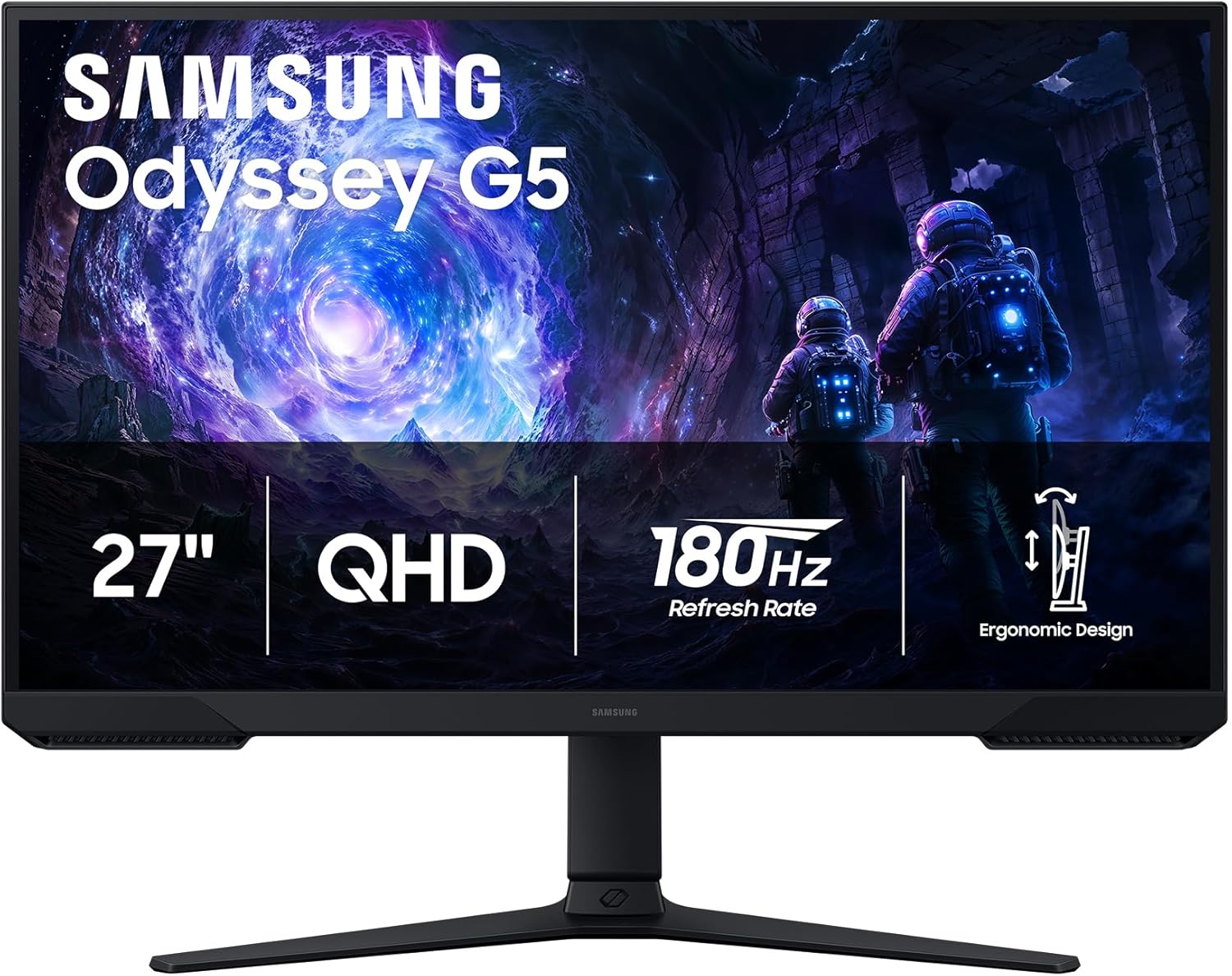
Samsung 27" Odyssey G5 (G51F) Series QHD (1440P) Gaming Monitor
A 27-inch QHD monitor built for fast-paced gaming, with a 180Hz refresh rate and 1ms response time. It suits gamers who want sharper detail than 1080p without stepping up to 4K.

Samsung 27” Odyssey OLED G5 (G50SF) Series QHD & QD-OLED Gaming Monitor
A 27-inch QHD QD-OLED gaming monitor built around a 180Hz refresh rate and near-instant response time. It suits gamers who prioritize speed and color accuracy over maximum resolution.