OLED Ultrawide Monitors With Real True Black HDR Contrast
True Black HDR is a specific VESA certification that only applies to OLED panels, because it requires the near-zero black levels that come from turning individual pixels fully off. That's different from the HDR10 or DisplayHDR 400 badges you'll see on VA and IPS ultrawides, which rely on backlight brightness tricks rather than true per-pixel contrast. If the phrase "true black" matters to your search, you're really asking for OLED, not just any HDR-labeled ultrawide.
Only a couple of monitors in this pool actually carry OLED panels with True Black certification. Everything else here is a VA or IPS ultrawide gaming monitor with a high refresh rate and HDR10 support at best, which is a real category of its own but not the same contrast experience. This guide ranks the true OLED options first, then lists the closest non-OLED ultrawides for anyone who wants the wide-screen gaming feel without OLED pricing or burn-in risk.
Picks were chosen from published panel type, HDR certification tier, refresh rate, and what recurring buyer feedback flags as strengths or weaknesses, not from hands-on testing.
We may earn a commission at no extra cost to you.
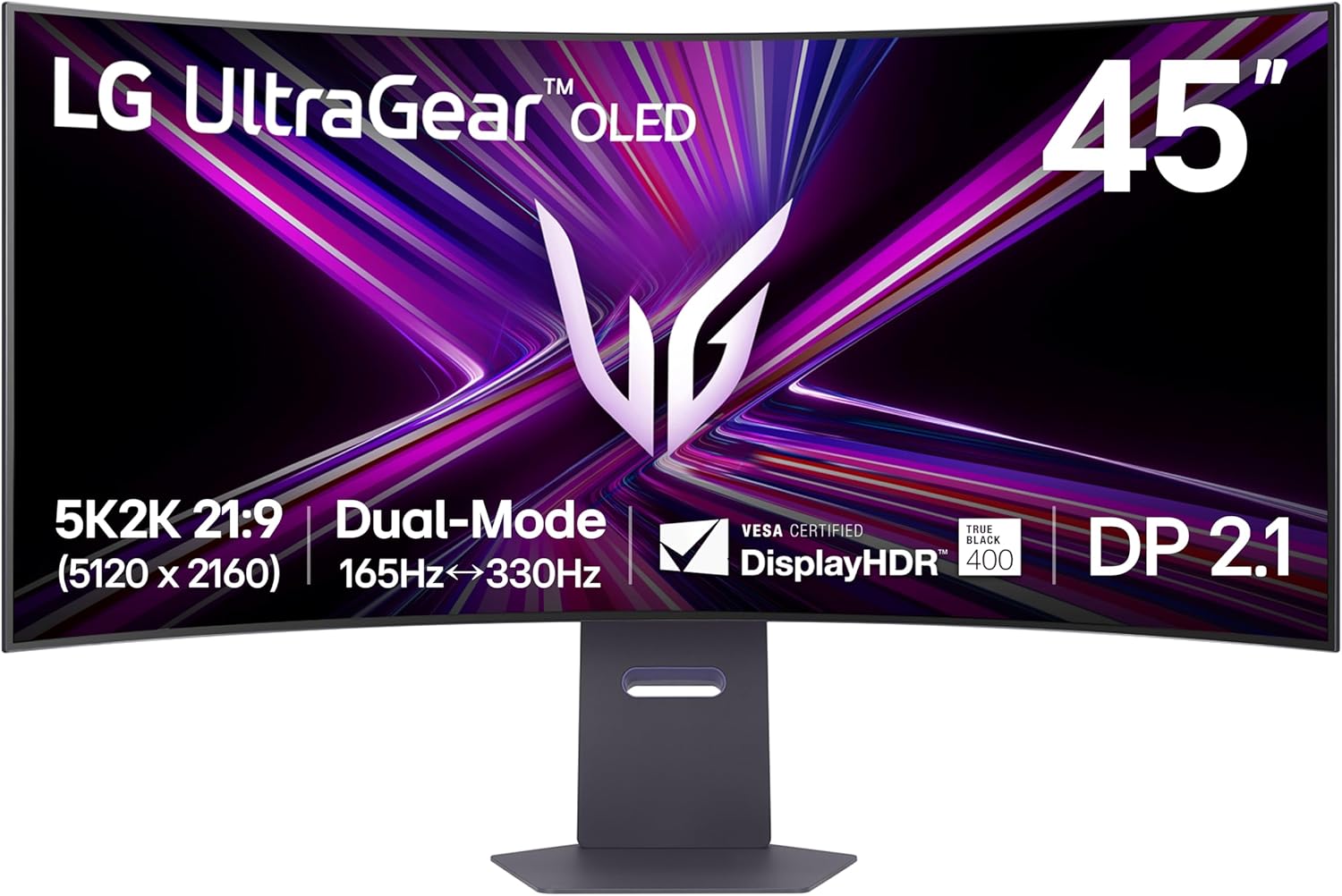
LG 45GX950A-B 45-inch Ultragear 5K2K WUHD (5120 x 2160) OLED Curved Gaming Monitor, Dual-Mode, 165Hz, 0.03ms, NVIDIA G-Sync, AMD FreeSync Premium Pro, HDR True Black 400, USB Type-C 90W, DP2.1
This is the only monitor in the pool combining a true OLED panel, DisplayHDR True Black 400 certification, and ultrawide curvature, plus a Dual Mode that trades resolution for up to 330Hz — it directly answers the query for buyers who want both immersion and speed.
- +5120x2160 resolution with 125 PPI for sharp text and detail
- +Dual Mode switches to 330Hz at lower resolution
- +0.03ms GtG response time for minimal ghosting
- −Requires a high-end GPU to use full 5K2K resolution
- −OLED panels carry inherent burn-in risk with static content
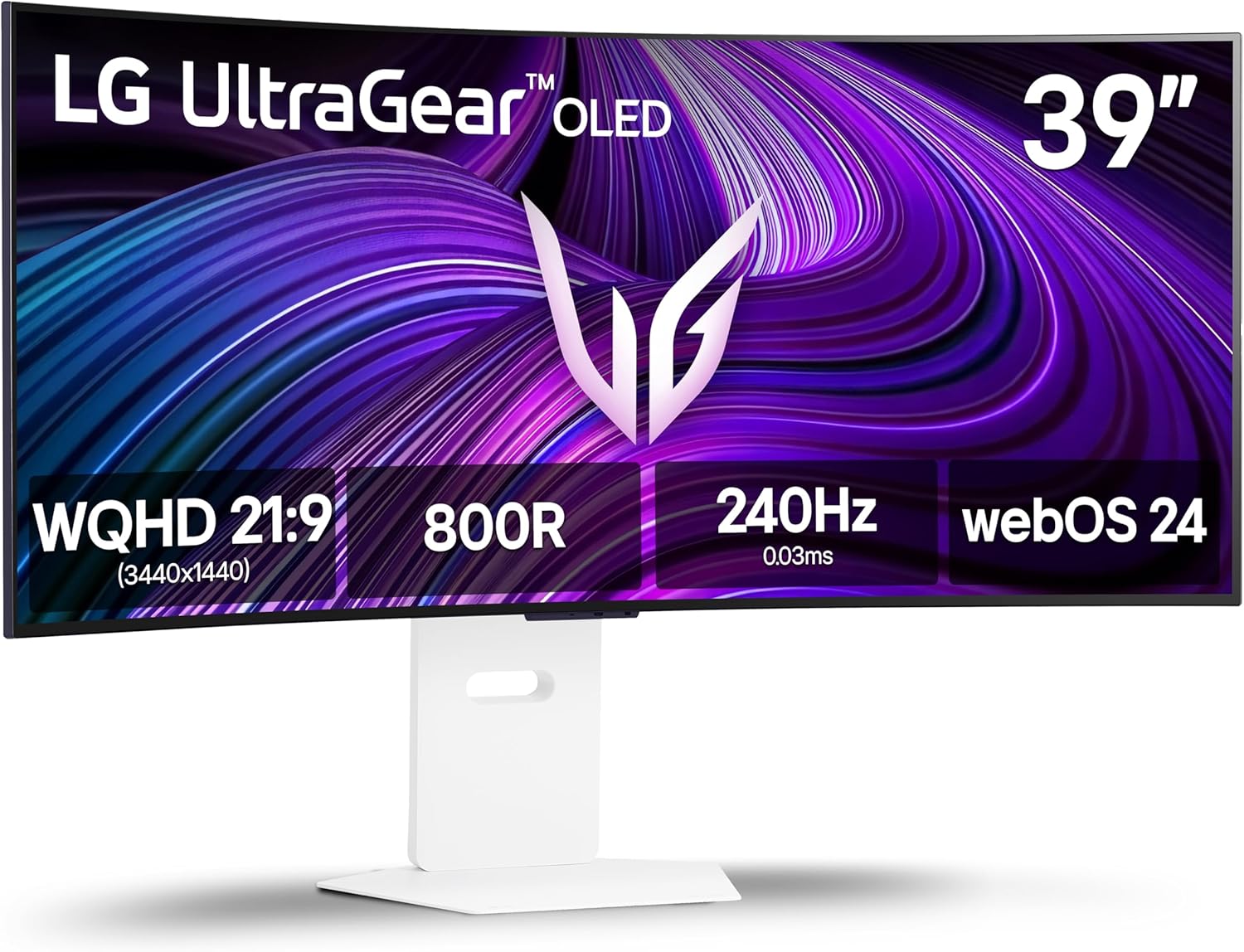
LG 39GX90SA-W 39-inch Ultragear WQHD (3440 x 1440) OLED Curved Gaming Monitor 240Hz, 1ms, NVIDIA G-Sync Compatible, AMD FreeSync Premium, VESA DisplayHDR True Black 400, webOS, USB Type-C, White
Also OLED with True Black 400 and a 1.5M:1 contrast ratio, this 39-inch model runs a flatter 800R curve and a class-leading 240Hz refresh, making it the pick for competitive gamers who want OLED contrast without the largest, priciest panel.
- +240Hz refresh and 0.03ms response for fast-paced gaming
- +FreeSync Premium and G-Sync Compatible for tear-free play
- +DisplayHDR True Black 400 with 1.5M:1 contrast ratio
- −800R curve less practical for spreadsheet or coding work
- −WQHD resolution is less pixel-dense than a 4K ultrawide

Samsung 34' Odyssey G5 Ultra-Wide Gaming Monitor with 1000R Curved Screen | 165Hz, 1ms, FreeSync Premium, Large Display, Eye Comfort, Multiple Ports, WQHD (LC34G55TWWNXZA)
For shoppers priced out of OLED, this 34-inch VA ultrawide delivers a 165Hz refresh and HDR10 support at a lower tier than True Black, giving a taste of curved-ultrawide gaming immersion without the OLED cost or burn-in tradeoff.
- +165Hz refresh rate suits fast-paced gaming
- +1ms MPRT response time reduces motion blur
- +FreeSync Premium cuts tearing and stutter
- −VA panel means narrower viewing angles than IPS
- −HDR10 without stated local dimming limits HDR depth

CRUA 34" WQHD 165Hz Ultrawide Curved Gaming Monitor, 1500R, FreeSync, Black | 21:9 Display With 120%sRGB Color, HDMI 2.0, DP 1.4, 3.5mm Audio Out and 75x75mm Wall Mount For PC Gaming, Editing and Work
A straightforward 34-inch 165Hz ultrawide for buyers who want the wide field of view for gaming but don't need HDR certification at all, since no HDR spec is listed here.
- +165Hz refresh rate with FreeSync for smoother gameplay
- +3440x1440 ultrawide resolution adds usable screen width
- +1500R curve and 178-degree viewing angle for immersion
- −No built-in speakers despite audio output port
- −No response time or HDR spec provided
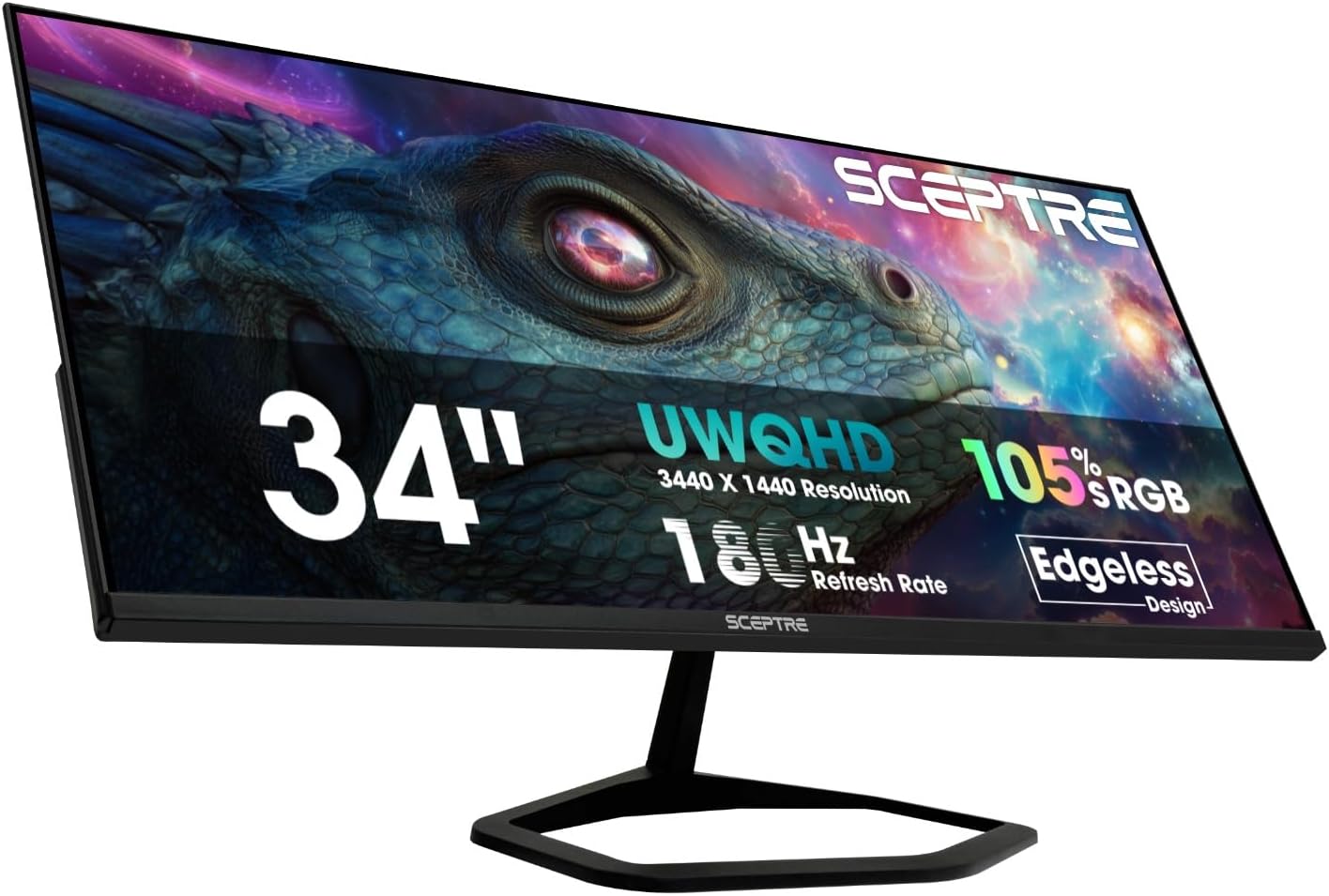
New! Sceptre 34-inch Prime Gaming Monitor 3440 x 1440 up to 180Hz DisplayPort HDMI Build-in Speakers, Machine Black 2027 (E345B-QU180D Series)
Rated up to 180Hz, this ultrawide targets fast-paced shooters on a budget; it skips HDR entirely, so it's for buyers who value refresh rate over contrast and picture depth.
- +34-inch 21:9 ultrawide adds real multitasking space
- +Up to 180Hz refresh rate over HDMI and DisplayPort
- +Matte screen surface reduces glare
- −Panel type and response time not specified
- −No HDR support listed in the specs

Philips 34 Inch Curved Computer Monitor UWQHD 100Hz USB-C PD VA, 346E2CUAE | 3440×1440 Monitor, HDMI, DP, USB 3.2 Hub, Built-in Speakers, Height Adjust, Adaptive Sync, 4yr Advance Replacement Warranty
A 34-inch curved ultrawide with USB-C Power Delivery and a built-in hub, useful for anyone who wants one cable running both a laptop dock and an ultrawide gaming display, even though its HDR and contrast fall well short of OLED True Black.
- +3440x1440 ultrawide resolution expands usable desktop space
- +USB-C Power Delivery charges a laptop over one cable
- +Built-in USB 3.2 hub reduces cable clutter
- −Glossy screen surface can show noticeable glare
- −Curved VA panel less suited to precise color or design work
What to look for
The spec that actually separates these monitors for this query is panel type plus HDR certification tier, not just refresh rate. "HDR10 support" on a VA panel means the monitor can decode HDR signal, but without per-pixel dimming or a real local-dimming array, blacks stay gray and contrast is limited. DisplayHDR True Black, by contrast, is only awarded to OLED panels and confirms the deep, uniform blacks that make HDR content look distinct from SDR. If a listing doesn't mention OLED or True Black specifically, assume it's using backlight-based HDR, which is a real step up from no HDR but not the same thing.
Beyond panel type, check refresh rate against your GPU. A 240Hz or 330Hz OLED ultrawide only pays off if your graphics card can push frames near that rate at the monitor's resolution; otherwise a 165Hz VA ultrawide will look nearly identical in practice while costing less. Also weigh OLED's well-documented burn-in risk with static UI elements (taskbars, HUDs) if you plan to also use the monitor for office work, since manufacturers note this as an inherent tradeoff rather than a defect.
This guide is compiled from manufacturer specifications and aggregated customer feedback on Amazon, with AI assistance in drafting. We have not personally tested every product listed. Prices and availability change frequently — always confirm on Amazon before buying.